10 tips to strengthen your inner resilience
Staying mentally strong helps you cope better with stress, setbacks and difficult moments. Health educator and author Cajsa Tengblad shares 10 tips to strengthen your inner resilience.


What is resilience?
Resilience works a bit like a muscle: you can train it. By facing difficult situations step by step, you build resources that help you deal with life's challenges. According to Cajsa, being mentally strong means having the tools you need to handle adversity. Just as you think about what to pack before a trip, you can also reflect on what you need for your life journey: support, rest, movement, creativity, relationships and self-care.
Below are 10 practical strategies to strengthen your inner resilience.
1. Be honest with yourself
Take a moment now and then to check in with how you are really feeling. Being honest with yourself takes practice. When someone asks, "How are you?", pause for a moment and try to answer honestly.
Set aside a little time for yourself and ask:
- What am I thinking, feeling and wanting?
- What do I dream about? What am I worrying about?
- What could help me move closer to the life I want?
Would you like to know how often you truly live mindfully and take time to reflect on yourself? Take our mindfulness test.
2. Cherish your relationships
We are social beings. Strong relationships with friends, family and people you trust can help you cope with difficult times. That is why loneliness can have a significant impact on mental wellbeing. A sense of connection, a smile, a conversation or someone who truly listens can strengthen your health.
Tip: Write your name in the middle of a sheet of paper. Around it, write down the names of people you can turn to in both good and difficult times. Keep this list and remind yourself that you do not have to carry everything alone.
3. Be creative
Creativity helps you express your feelings and process experiences. This could mean writing, singing, dancing, drawing or painting. Everyone is creative and has the ability to develop their own forms of creative expression.
What you create does not need to be perfect or shared with others. It can simply be something that brings you strength, comfort or peace.
Create your own "creative first-aid kit" with feel-good songs, films, photos and texts that lift your mood.
4. Be kind to yourself
We are often kinder to others than we are to ourselves. Try treating yourself the way you would treat a good friend.
Do you find that difficult? Ask people you trust which positive qualities they see in you.
Especially during stressful periods, it helps to regularly ask yourself:
- Am I getting enough sleep, exercise and healthy food?
- Am I getting enough rest and spending enough time with others? Is there a healthy balance?
- What can I do today to take better care of myself?
5. Fill your life with what is good for you
What you read, watch and listen to affects how you feel. Just as food influences your body, media influences your thoughts and emotions.
Screen time matters, but the content you consume matters just as much. Choose things that inspire, nourish or calm you. Taking a conscious digital detox from time to time can also help.
Ask yourself:
- How much time do I spend in front of a screen?
- How does the content I consume affect my mood, thoughts and behaviour?
- How can I be more intentional about what I read, watch and listen to?
6. Get involved and make a difference
Sometimes it may feel like your actions do not make much of a difference. Especially when you are exposed to a lot of negative news, it is easy to feel powerless.
Yet small, meaningful actions can have a big impact on the people around you.
A smile, an encouraging word, practical help or simply being fully present can make a real difference. Also take a moment to think about the people who inspire you to do good and those you can work with to create positive change. Together, small actions often have a greater impact than you realise.
7. Dare to pursue your dream
Many things we now take for granted once started as a dream. But dreams only become reality when you invest time, attention and consistent effort.
Ask yourself: What do I dream about? And what do I need to do to move closer to that dream, step by step?
Cajsa shares five simple tips:
- Describe your dream as clearly and specifically as possible.
- Break it down into small goals and celebrate your progress.
- Make time for what truly matters to you.
- Find people who share your vision or can support you.
- Keep your dream in sight, continue learning and do not give up too quickly.
8. Do good for others
Research on happiness shows that people often feel better when they do something kind for someone else. It may even have a stronger effect on the brain's reward system than food, money or sex.
Generosity does not have to be grand. You can help in a way that suits you: through practical support, kind words, creativity, attention or simply your time.
Often, caring matters more than the perfect gesture. Start small, today.
9. Forgive yourself and others
When someone hurts you, forgiveness can be difficult. Yet holding on to anger or resentment can continue to weigh you down.
Forgiveness does not mean excusing what happened or giving up your boundaries. You are allowed to feel angry, sad or disappointed.
Forgiveness means gradually choosing not to let what happened define your entire life. Talk to someone you trust about what happened and how it affects you.
Forgiving yourself can be just as challenging. Try to look at both your strengths and your limitations with kindness and understanding.
10. Give yourself space
Give yourself space to feel, think, dream and grow. This can be a physical place, but also time or mental peace.
Space means allowing yourself the freedom to be who you are, without constantly trying to meet your own expectations or those of others.
You do not need to be perfect or have everything figured out to move forward. You are good enough to take the next step today.
How can Doktr help?
Do stress, worries or difficult moments continue to weigh on you? Through the Doktr app, you can speak with a licensed psychologist whenever you need support.
This gives you easy access to professional guidance and advice, whenever it suits you.
Doktr n’est pas une salle d’urgence
L'aide offerte par les prestataires de soins de santé concerne uniquement des questions d'ordre médical ou psychologique et ne nécessitant pas de soins d'urgence ou d'hospitalisation. Si vous devez être hospitalisé d'urgence, appelez le 112.

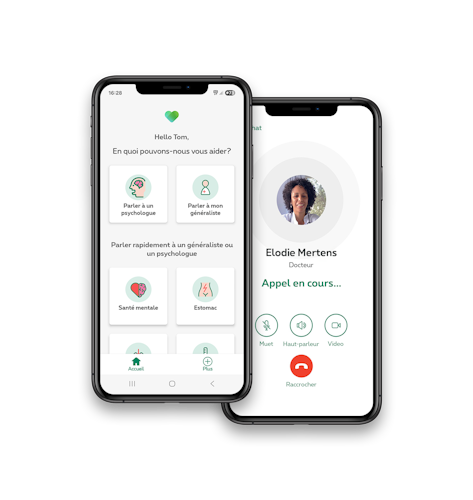
Consultez un médecin généraliste ou un psychologue en ligne
- Une seule app pour vos soins physiques et mentaux
- Sans délais d'attente
- Où que vous soyez